[:en]
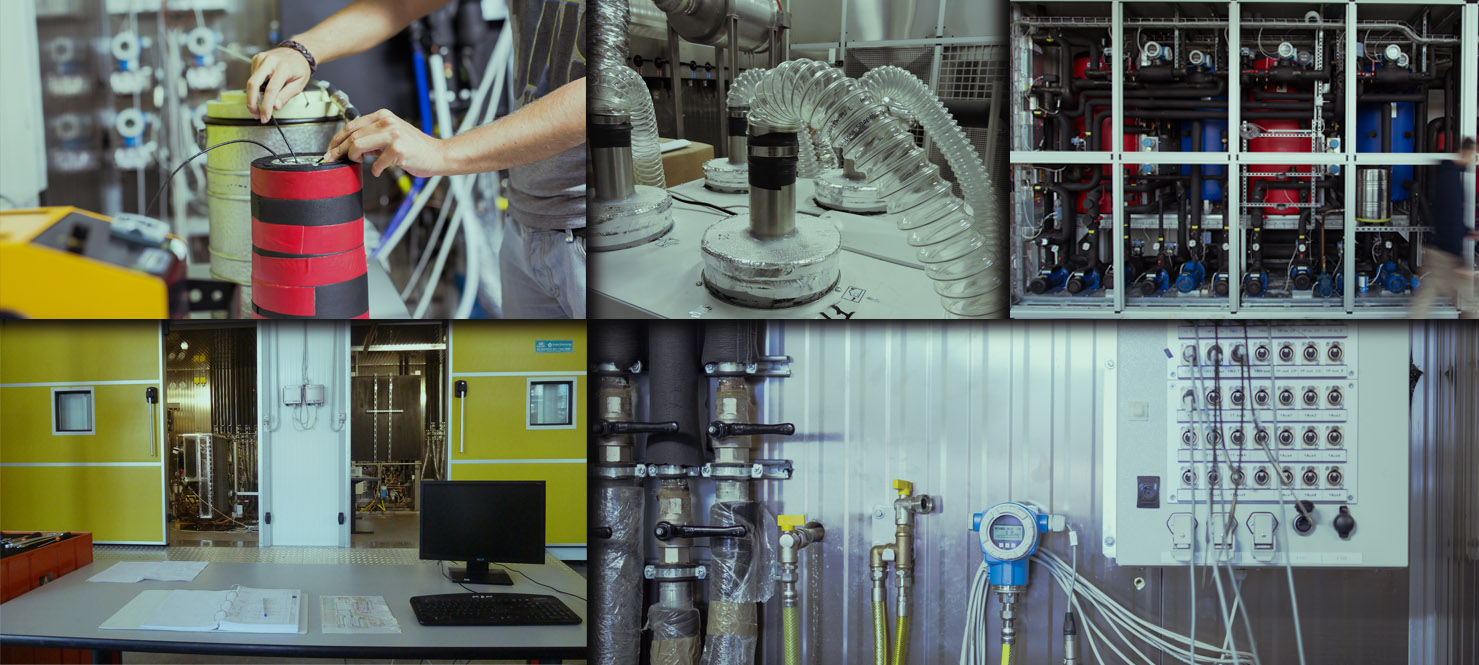
RELAB offers a wide range of test services aimed at the research and development of products and at their acoustic and performance assessment. Among these:
- Accredited tests according to EN ISO IEC 17025
- Tests for the nominal and seasonal performance assessment according to the reference standards
- Safety and operative tests according to the reference standards
- Test at design and off-design conditions and at the operating limit conditions
- Acoustic tests “in-situ” and in laboratory according to the reference standards
- Research and development of products and components
- Development and tuning of simulation tools
- Product labelling and marking
All according to the most recent European standards and regulations:
- EN 14511, EN14825, EN16147, EN1397, EN12309 e VDI4650
- EN12102, EN ISO 3743-1, EN ISO 9614-1/2 e EN16583
- ECO design, ECO Label e direttive ErP
TESTED APPLIANCES
RELAB’s facilities allow evaluating thermal and acoustic performances of a wide range of appliances including:
- heat pumps and liquid chilling packages/chillers with electrical compressor
- heat pumps for DHW production with electrical compressor
- gas heat pumps and chillers
- fancoils(fan coil)
- heat recovery devices
- air conditioners
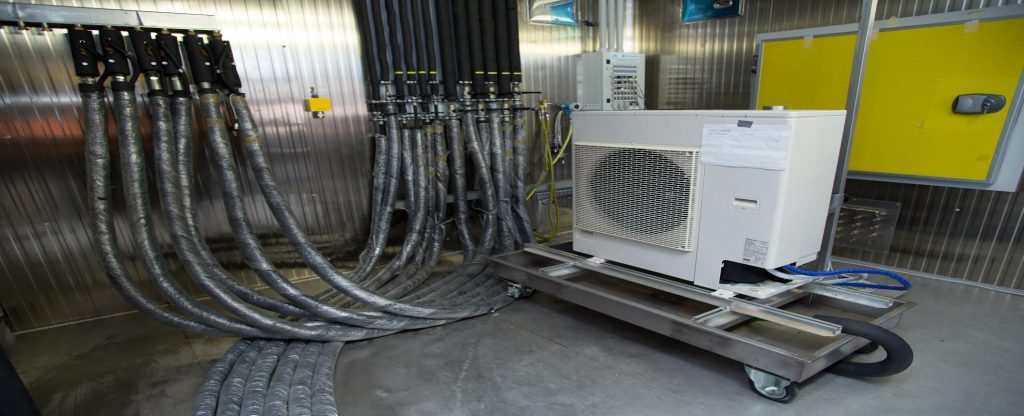
HEAT PUMPS AND LIQUID CHILLING PACKAGES/CHILLERS WITH ELECTRICAL COMPRESSOR
Machine type
- heat pumps and hybrid heat pumps
- comfort chillers and high temperature process chillers
- Split or monoblock
- Air/Water, Brine/Water, Water/Water
- Refrigerants: HFC safety class A1, R32, R452B, R290
Test Type
- Performance tests according to the reference standard (direct enthalpy method), at full and partial load, for the determination of:
- Cooling/heating capacity
- Energy efficiency at nominal conditions/ nominal energy efficiency (EER/COP)
- Energy efficiency on seasonal basis/seasonal energy efficiency (SEER/SCOP)
- Energy efficiency class for the labelling of the tested unit
- Operating and safety tests (“envelope”)
- Tests according to “custom” load profiles and climatic curves
- R&D tests
- Acoustic tests for the determination of:
- Sound power level with pressure method according to reference standard
- Sound power level “in-situ” with intensity method according to reference standard
- Sound source directivity through acoustic mapping by using microphone arrays
- Acoustic characterization and optimization
Operating Ranges
- Rated power: up to 100kW
- Indoor environment temperature (DB): +5 °C ÷ +60°C
- Outdoor environment temperature (DB): -30°C ÷ +60°C
- Relative Humidity (RH): 20% ÷ 95%
- Heat transfer medium temperature: -20°C ÷ +90°C
- Heat transfer medium flow rate: 0.12 m3/h ÷ 24 m3/h
- Frequency band (for acoustic tests): 100Hz÷10kHz
Rules, Regulations and Reference Directives
- EN14511 e EN14825
- Regolation 811 (Ecolabel) and Regolation 813 (Ecodesign)
- EN ISO 3743-1, EN 12102-1 and EN ISO 9614-1/2
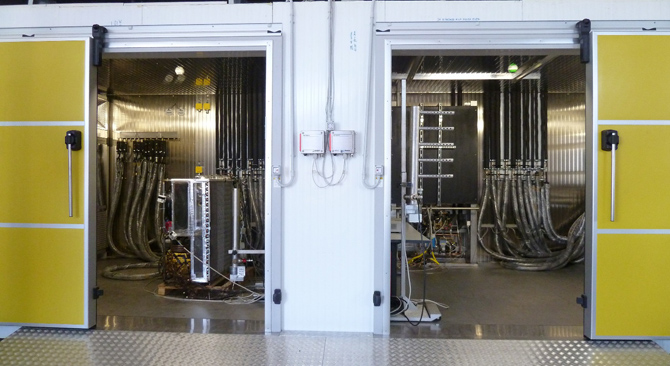
HEAT PUMPS FOR DOMESTIC HOT WATER (DHW) PRODUCTION WITH ELECTRICAL COMPRESSOR
Machine Type
- Ducted and not ducted heat pumps, with integrated or separate storage tank
- Split or Monoblock
- Air/Water, Brine/Water, Water/Water
- Refrigerants: HFC safety class A1, R32, R452B, R290
Test Type
- Performance tests according to the standardized tapping profiles S, M, L, XL, XXL, for the determination of::
- Daily useful energy
- Nominal and seasonal coefficient of performance (COP/SCOP) for the production of domestic hot water (DHW)
- Energy efficiency according to European Regulations (ƞACS)
- Tests according to “custom” taping profiles
- Operating and safety tests (“envelope”)
- R&D tests
- Acoustic tests for the determination of:
- Sound power level with pressure method according to reference standard
- Sound power level “in-situ” with intensity method according to reference standard
- Sound source directivity through acoustic mapping by using microphone arrays
- Acoustic characterization and optimization
Operating Ranges
- Rated power: up to 20kW
- Indoor environment temperature: +5 °C ÷ +60°C
- Outdoor environment temperature: -30°C ÷ +60°C
- Relative humidity (RH): 20% ÷ 95%
- Heat transfer medium temperature: > +5°C
- Heat transfer medium flow rate: up to 20 l/min
- Frequency band (for acoustic tests): 100Hz÷10kHz
Rules, Regulations and Reference Directives:
- EN 16147
- Regolation 812/2014 (Ecolabel) e Regulation 814/2013 (Ecodesign)
- EN 12102-2, EN ISO 3743-1 and EN ISO 9614-1/2
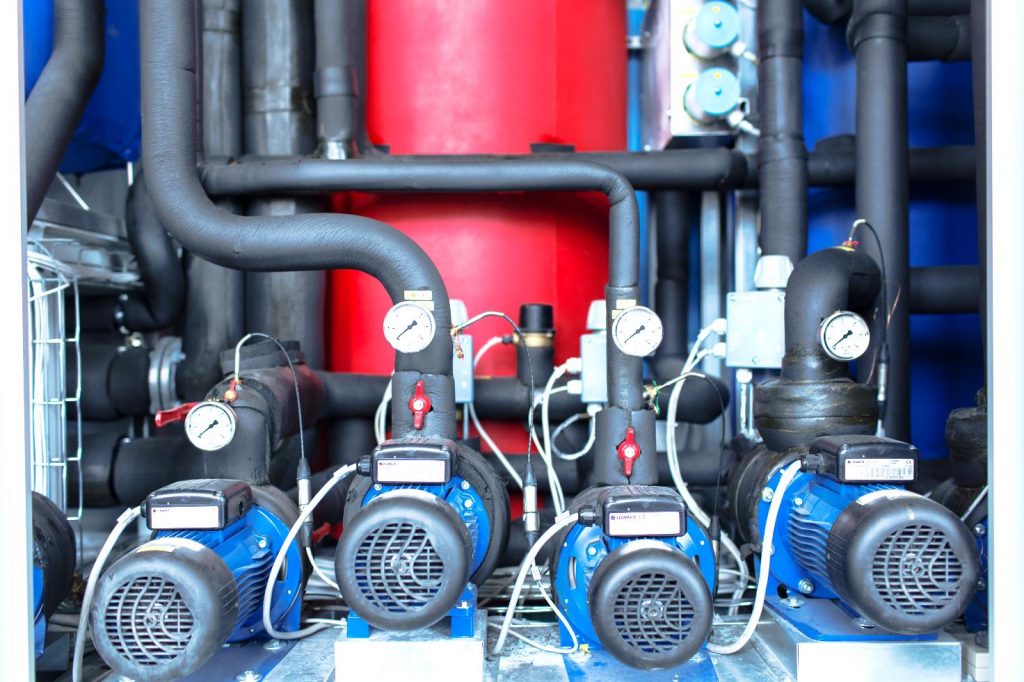
GAS HEAT PUMPS AND CHILLERS
Machine Type
- Chillers and monovalent or hybrid heat pumps
- Monoblock
- Air/Water, Brine/Water, Water/Water
- Gas: Methane from grid/ Methane G20 in certified bottles, (blend), Methane/Hydrogen in certified bottles
- Working pairs: NH3/H2O (Ammonia/Water), H2O /LiBr (Water /Litium Bomide), Water/Siliga gel
Test Type
- Performance tests according to the reference standard (direct enthalpy method), at full and partial load, for the determination of:
- Cooling/heating capacity
- Energy efficiency at nominal conditions/ nominal energy efficiency (GUEc/GUEh)
- Energy efficiency on seasonal basis/seasonal energy efficiency (SGUEc/SPERc/ SGUEh/SPERh)
- Energy efficiency class for the labelling of the tested unit
- Operating and safety tests (“envelope”)
- Tests according to “custom” load profiles and climatic curves
- R&D tests
- Acoustic tests for the determination of:
- Sound power level with pressure method according to reference standard
- Sound power level “in-situ” with intensity method according to reference standard
- Sound source directivity through acoustic mapping by using microphone arrays
- Acoustic characterization and optimization
Operating Ranges
- Rated power: up to 100kW
- Indoor environment temperature (DB): +5 °C ÷ +60°C
- Outdoor environment temperature (DB): -30°C ÷ +60°C
- Relative Humidity (RH): 20% ÷ 95%
- Heat transfer medium temperature: -20°C ÷ +90°C
- Heat transfer medium flow rate: 0.12 m3/h ÷ 24 m3/h
- Gas flow rate: 0.100 m3/h ÷ 7m3/h
- Frequency band (for acoustic tests): 100Hz÷10kHz
Rules, Regulations and Reference Directives:
- EN 12309, VDI 4650 Blatt2/Part2
- Regulation 811/2013 (Ecolabel) and Regulation 813/2013 (Ecodesign)
- EN ISO 3743-1, EN 12102-1 and EN ISO 9614-1/2
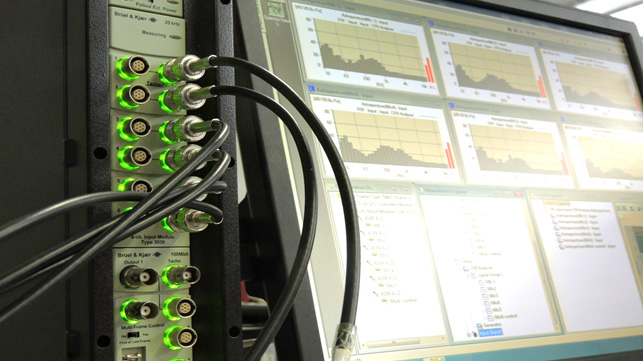
FAN COILS
Machine Type
Not ducted fan coils
Test Type
- Performance tests according to the reference standard for the determination of:
- Cooling/heating capacity
- Latent cooling capacity
- Sensible cooling capacity
- Tests according to “custom” load profiles and climatic curves
- Operating and safety tests (“envelope”)
- Acoustic tests for the determination of:
- Sound power level with pressure method according to reference standard
- Sound power level “in-situ” with intensity method according to reference standard
- Sound source directivity through acoustic mapping by using microphone arrays
Operating Ranges
- Rated power: up to 100kW
- Indoor environment temperature (DB): +5 °C ÷ +60°C
- Relative Humidity (RH): 20% ÷ 95%
- Heat transfer medium temperature: +5°C ÷ +90°C
- Heat transfer medium flow rate: 0 m3/h ÷ 24 m3/h
- Frequency band (for acoustic tests): 100Hz÷10kHz
Rules, Regulations and Reference Directives
- EN 1397
- EN ISO 3743-1, EN 16583 and EN ISO 9614-1/2
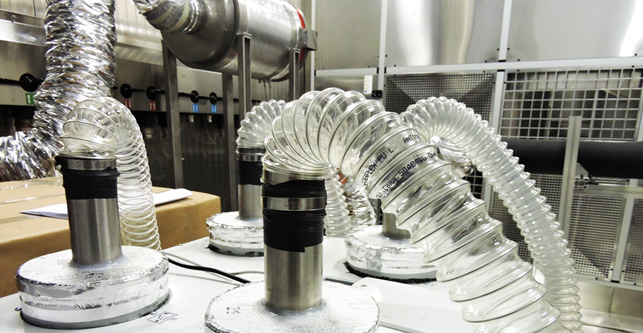
HEAT RECOVERY DEVICES
Machine Type
- Category I, Category IIa, Category IIb ( according to definitions in EN308)
Test Type
- Tests according to the reference standard for the determination of:
- Thermal and hygrometric efficiency
- External losses
- Internal losses on exhausted air side
- Pressure losses on the exhausted air side and on the supply air side
- Tests according to “custom” load profiles and climatic curves
Operating Ranges
- Air flow: 100m3/h ÷ 2000 m3/h
- Indoor environment temperature (DB): +5 °C ÷ +60°C
- Outdoor environment temperature (DB): -30°C ÷ +60°C
- Relative Humidity (RH): 20% ÷ 95%
Rules, Regulations and Reference Directives:
AIR CONDITIONERS AND HEAT PUMPS
Machine Type
- Conditioners and/or heat pumps
- Close control unit
- Single split or Monoblock
- Air/Air, Water/Air
- Refrigerants: HFC safety class A1, R32, R452B, R290
Test Type
- Operating and safety tests (“envelope”)
- Tests according to “custom” load profiles and climatic curves
- R&D tests
- Acoustic tests for the determination of:
- Sound power level with pressure method according to reference standard
- Sound power level “in-situ” with intensity method according to reference standard
- Sound source directivity through acoustic mapping by using microphone arrays
- Acoustic characterization and optimization
Operating Ranges
- Rated power: up to 100kW
- Indoor environment temperature (DB): +5 °C ÷ +60°C
- Relative Humidity (RH): -30°C ÷ +60°C
- Heat transfer medium temperature: 20% ÷ 95%
- Frequency band (for acoustic tests): 100Hz÷10kHz
Rules, Regulations and Reference Directives
- EN14511 and EN14825
- Regulation UE 626/2011 (Ecolabel) and Regulation UE 206/2012 (Ecodesign)
- EN ISO 3743-1, EN 12102-1 e EN ISO 9614-1/2
[:it]
RELAB ha come obbiettivo quello di offrire una vasta gamma di prove e servizi volti alla ricerca e sviluppo e alla valutazione delle prestazioni termiche e acustiche tra cui:
- Prove accreditate secondo norma EN ISO IEC 17025
- Prove per la valutazione delle prestazioni nominali e stagionali secondo norma
- Prove operative e di sicurezza secondo norma
- Prove acustiche secondo norma
- Prove in condizioni di design e off-design, verifica delle condizioni limite di funzionamento
- Ricerca e sviluppo di prodotti e componenti
- Sviluppo e messa a punto di tool di simulazione
- Etichettatura e marcatura di prodotto
In base ai più recenti standard e regolamenti europei:
- EN 14511, EN14825, EN16147, EN1397, EN12309 e VDI4650
- EN12102, EN ISO 3743-1, EN ISO 9614-1/2 e EN16583
- ECO design, ECO Label e direttive ErP
MACCHINE TESTATE
Le attrezzature di RELAB consentono di valutare le prestazioni termiche ed acustiche di una vasta gamma di apparecchiature quali:
- pompe di calore e refrigeratori di liquido con compressore elettrico
- pompe di calore per ACS con compressore elettrico
- pompe di calore e refrigeratori di liquido a gas
- ventilconvettori (fan coil)
- recuperatori di calore
- condizionatori e pompe di calore ad aria
POMPE DI CALORE E REFRIGERATORI DI LIQUIDO CON COMPRESSORE ELETTRICO
Tipologia di macchina
- pompe di calore, pompe di calore ibride
- refrigeratori di liquido per comfort interno e refrigeratori di processo ad alta temperatura
- Split o monoblocco
- Aria/Acqua, Salamoia/Acqua, Acqua/Acqua
- Refrigeranti: HFC Classe di sicurezza A1, R32, R452B, R290
Tipologia di test
- Prove prestazionali secondo norma di riferimento (metodo entalpico diretto), a pieno carico e a carico parziale per la determinazione di:
- Potenza termica di raffreddamento/ riscaldamento
- Efficienza energetica nominale (EER/COP)
- Efficienza energetica stagionale (SEER/SCOP)
- Classe di efficienza energetica per l’etichettatura dell’unità testata
- Prove operative e di sicurezza
- Prove secondo profili di carico e curve climatiche “custom”
- Prove di sviluppo e R&D
- Prove acustiche per la determinazione di:
- Livello di potenza sonora con metodo in pressione secondo normativa vigente
- Livello di potenza sonora “in situ” con metodo intensimetro secondo normativa vigente
- Direttività della sorgente sonora attraverso mappatura acustica mediante array microfonici
- Caratterizzazione e ottimizzazione acustica
Range operativi
- Resa termica nominale machine in prova: fino a 100kW
- Temperatura ambiente interno: +5 °C ÷ +60°C
- Temperatura ambiente esterno: -30°C ÷ +60°C
- Umidità Relativa (RH): 20% ÷ 95%
- Temperatura fluido termovettore: -20°C ÷ +90°C
- Portata fluido termovettore: 0.12 m3/h ÷ 24 m3/h
- Banda di frequenza (per prove acustiche): 100Hz÷10kHz
Norme, regolamenti e direttive di riferimento
- EN14511 e EN14825
- Regolamento 811 (Ecolabel) e Regolamento 813 (Ecodesign)
- EN ISO 3743-1, EN 12102-1 e EN ISO 9614-1/2
POMPE DI CALORE ACS CON COMPRESSORE ELETTRICO
Tipologia di macchina
- Pompe di calore canalizzate e non canalizzate, con accumulo integrato o separato
- Split o monoblocco
- Aria/Acqua, Salamoia/Acqua, Acqua/Acqua
- Refrigeranti: HFC Classe di sicurezza A1, R32, R452B, R290
Tipologia di test
- Prove prestazionali secondo profili di prelievo normalizzati S, M, L, L, XL, XXL per la determinazione di:
- Calore utile giornaliero
- Coefficiente di prestazione nominale (COP) e stagionale (SCOP) per la produzione di acqua calda sanitaria (ACS)
- Efficienza energetica secondo regolamenti europei (ƞACS)
- Prove secondo profili di prelievo “custom”
- Prove operative e di sicurezza
- Prove di sviluppo e R&D
- Prove acustiche per la determinazione di:
- Livello di potenza sonora con metodo in pressione secondo normativa vigente
- Livello di potenza sonora “in situ” con metodo intensimetro secondo normativa vigente
- Direttività della sorgente sonora attraverso mappatura acustica mediante array microfonici
- Caratterizzazione e ottimizzazione acustica
Range operativi
- Resa termica nominale machine in prova: fino a 20kW
- Temperatura ambiente interno: +5 °C ÷ +60°C
- Temperatura ambiente esterno: -30°C ÷ +60°C
- Umidità Relativa (RH): 20% ÷ 95%
- Temperatura acqua calda sanitaria in ingresso: > +5°C
- Portata acqua calda sanitaria: fino a 20 l/min
- Banda di frequenza (per prove acustiche): 100Hz÷10kHz
Norme, regolamenti e direttive di riferimento
- EN 16147
- Regolamento 812/2014 (Ecolabel) e Regolamento 814/2013 (Ecodesign)
- EN 12102-2, EN ISO 3743-1 e EN ISO 9614-1/2
REFRIGERATORI DI LIQUIDO E POMPE DI CALORE A GAS
Tipologia di macchina
- Refrigeratori di liquido e Pompe di calore monovalenti o ibride
- monoblocco
- Aria/Acqua, Salamoia/Acqua, Acqua/Acqua
- Metano rete/Metano G20 in bombole “certificate”/ Miscela (blend) Metano/Idrogeno in bombole “certificate”
- Fluidi di lavoro: NH3/H2O (Ammoniaca/Acqua) – H2O /LiBr (Acqua/Bromuro di Litio) – Acqua /Siliga gel
Tipologia di test
- Prove prestazionali secondo norma di riferimento (metodo entalpico diretto), a pieno carico e a carico parziale per la determinazione di:
- Potenza termica di raffreddamento/ riscaldamento
- Efficienza energetica nominale (GUEc/GUEh)
- Efficienza energetica stagionale (SGUEc/SPERc/SGUEh/SPERh)
- Classe di efficienza energetica per l’etichettatura dell’unità testata
- Prove operative e di sicurezza
- Prove secondo profili di carico e curve climatiche “custom”
- Prove di sviluppo e R&D
- Prove acustiche per la determinazione di:
- Livello di potenza sonora con metodo in pressione secondo normativa vigente
- Livello di potenza sonora “in situ” con metodo intensimetro secondo normativa vigente
- Direttività della sorgente sonora attraverso mappatura acustica mediante array microfonici
- Caratterizzazione e ottimizzazione acustica
Range operativi
- Resa termica nominale machine in prova: fino a 100kW
- Temperatura ambiente interno: +5 °C ÷ +60°C
- Temperatura ambiente esterno: -30°C ÷ +60°C
- Umidità Relativa (RH): 20% ÷ 95%
- Temperatura fluido termovettore: -20°C ÷ +90°C
- Portata fluido termovettore: 0.12 m3/h ÷ 24 m3/h
- Portata gas: 0.100 m3/h ÷ 7m3/h
- Banda di frequenza (per prove acustiche): 100Hz÷10kHz
Norme, regolamenti e direttive di riferimento
- EN 12309, VDI 4650 Blatt2/Part2
- Regolamento 811/2013 (Ecolabel) e Regolamento 813/2013 (Ecodesign)
- EN ISO 3743-1, EN 12102-1 e EN ISO 9614-1/2
VENTILCONVETTORI (FAN COIL)
Tipologia di macchina
Ventilconvettori non canalizzati
Tipologia di test
- Prove prestazionali secondo norma di riferimento per la determinazione di:
- Potenza termica di raffreddamento/riscaldamento
- Potenza di raffreddamento latente
- Potenza di raffreddamento sensibile
- Prove secondo profili di carico e temperature ambiente “custom”
- Prove operative e di sicurezza
- Prove acustiche per la determinazione di:
- Livello di potenza sonora con metodo in pressione secondo normativa vigente
- Livello di potenza sonora “in situ” con metodo intensimetro secondo normativa vigente
- Direttività della sorgente sonora attraverso mappatura acustica mediante array microfonici
Range operativi
- Resa termica nominale machine in prova: fino a 100kW
- Temperatura ambiente interno: +5 °C ÷ +60°C
- Umidità Relativa (RH): 20% ÷ 95%
- Temperatura fluido termovettore: +5°C ÷ +90°C
- Portata fluido termovettore: 0 m3/h ÷ 24 m3/h
- Banda di frequenza (per prove acustiche): 100Hz÷10kHz
Norme, regolamenti e direttive di riferimento
- EN 1397
- EN ISO 3743-1, EN 16583 e EN ISO 9614-1/2
RECUPERATORI DI CALORE
Tipologia di macchina
Recuperatori di:
- Categoria I , Categoria IIa e Categoria IIb (definiti secondo EN 308)
Tipologia di test
- Prove secondo norme di riferimento per la determinazione di:
- Efficienza termica ed igrometrica
- Perdite esterne
- Perdite interne lato aria di scarico
- Perdite di carico sul lato dell’aria di scarico e su quello di alimentazione
- Prove secondo profili di carico e curve climatiche “custom”
Range operativi
- Portata aria: 100m3/h ÷ 2000 m3/h
- Temperatura ambiente interno: +5 °C ÷ +60°C
- Temperatura ambiente esterno: -30°C ÷ +60°C
- Umidità Relativa (RH): 20% ÷ 95%
Norme, regolamenti e direttive di riferimento
CONDIZIONATORI E POMPE DI CALORE AD ARIA
Tipologia di macchina
- Condizionatori e/o pompe di calore
- Close control unit
- Single split o monoblocco
- Aria/Aria, Acqua /Aria
- Refrigeranti: HFC Classe di sicurezza A1 – R32 – R452B – R290
Tipologia di test
- Prove operative e di sicurezza
- Prove secondo profili di carico e curve climatiche “custom”
- Prove di sviluppo e R&D
- Prove acustiche per la determinazione di:
- Livello di potenza sonora con metodo in pressione secondo normativa vigente
- Livello di potenza sonora “in situ” con metodo intensimetro secondo normativa vigente
- Direttività della sorgente sonora attraverso mappatura acustica mediante array microfonici
- Caratterizzazione e ottimizzazione acustica
Range operativi
- Resa termica nominale machine in prova: fino a 100kW
- Temperatura ambiente interno: +5 °C ÷ +60°C
- Temperatura ambiente esterno: -30°C ÷ +60°C
- Umidità Relativa (RH): 20% ÷ 95%
- Banda di frequenza (per prove acustiche): 100Hz÷10kHz
Norme, regolamenti e direttive di riferimento
- EN14511 e EN14825
- Regolamento UE 626/2011 (Ecolabel) e Regolamento UE 206/2012 (Ecodesign)
- EN ISO 3743-1, EN 12102-1 e EN ISO 9614-1/2
[:]