[:en]
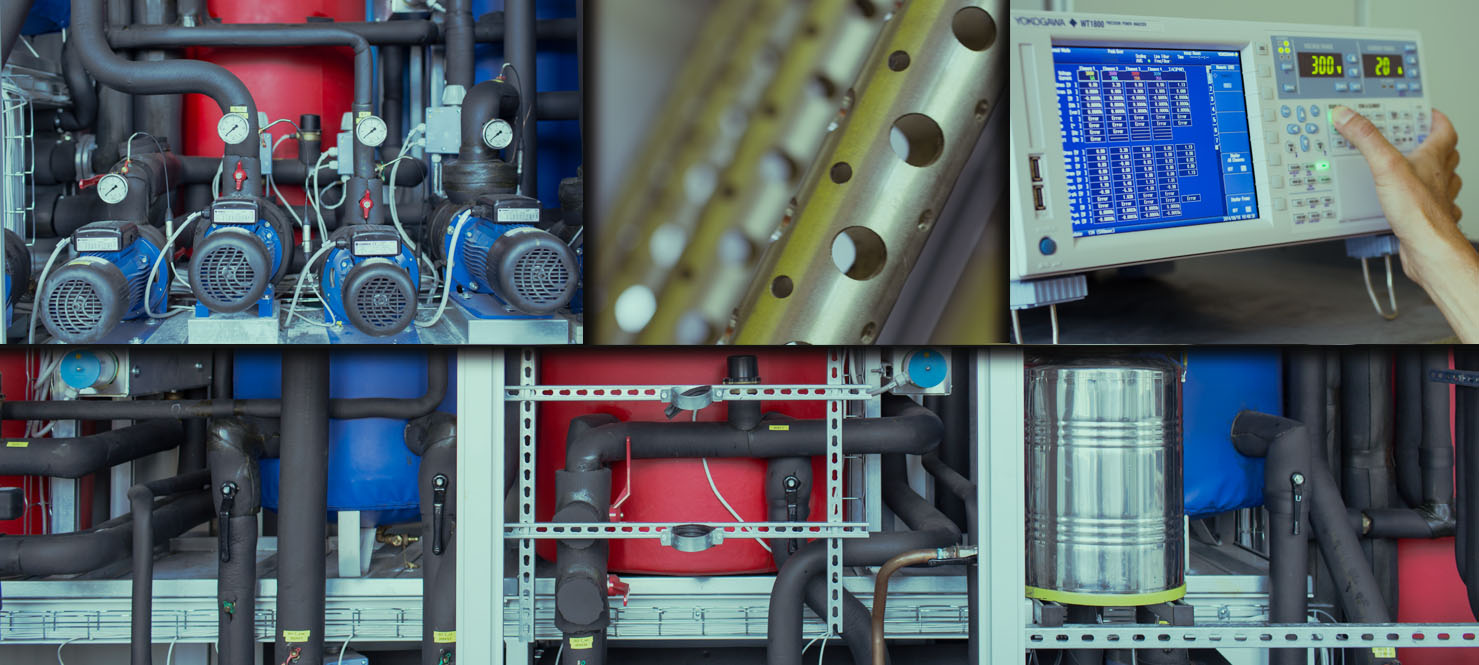
RELAB Laboratory is equipped with two calibrated calorimeters for testing appliances having rated power up to 100 kW and with test benches for testing domestic hot water heat pumps, gas heat pumps and heat recovery devices. In the climatic chambers of the calorimeter up to 100kW, acoustic tests according to the reference standards are carried out.
In detail:
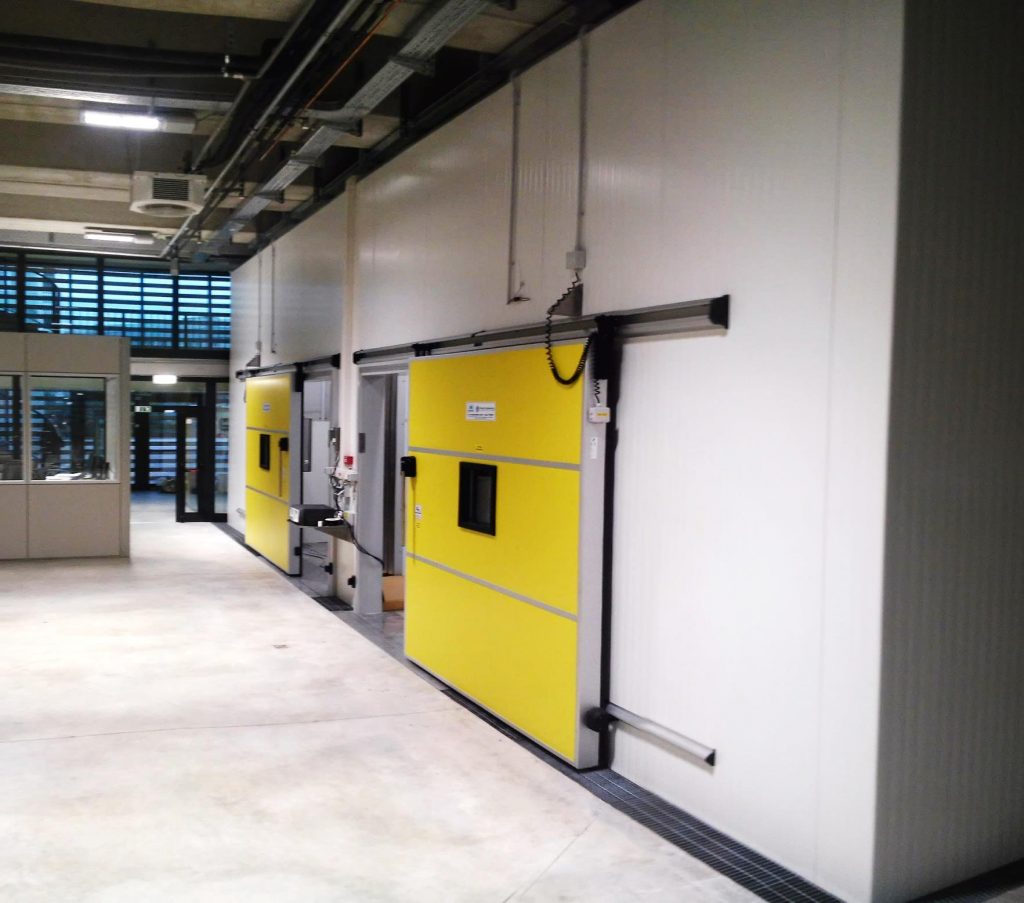
The calorimeter consists of two climatic chambers (indoor chamber and outdoor chamber) which allow reproducing the typical operating conditions (residential, commercial, technical) at which the tested appliances work. These conditions are reproduced in terms of temperature and humidity of the indoor and outdoor environments. In detail: in the indoor chamber, the air temperature (DB) can vary from 0°C to 60°C; while in the outdoor chamber, from -30°C to 60°C. Hydronic circuits positioned inside each chamber allow instead to reproduce flow rates from 0.1 m3/h to 5m3/h.
The calorimeter consists of two climatic chambers (chamber 1and chamber 2) each one able to test appliances having rated power up to 50 kW. By removing the separating wall between the two chamber, it’s possible to obtain a unique chamber able to test monoblock appliances having rated power up to 100kW. Both chambers are able to reproduce the operating conditions in terms of temperature (from -30°C to 60°C) and humidity prescribed by the reference standards. Hydronic circuits inside each chamber allow reproducing flow rates up to 25m3/h..
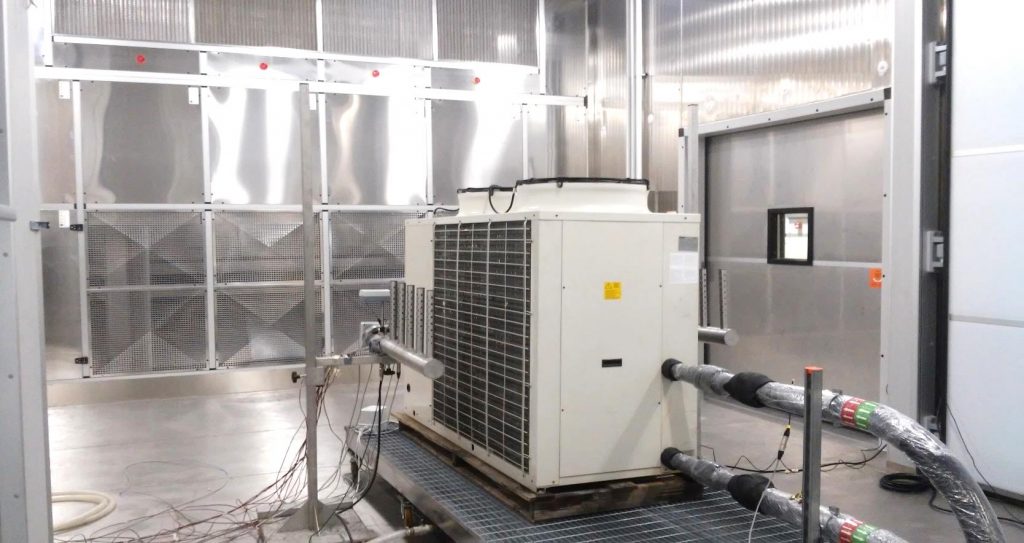
Features and Operating range of the two calorimeters (up to 25kW and up to100kW)
| QUANTITY | OPERATING RANGES |
| Air Temperature – Indoor Chamber | 5°C ÷ +60°C |
| Air Temperature – Outdoor Chamber | -30°C ÷ +60°C |
| Relative Humidity | 20% ÷ 95% |
| Heat transfer medium (water/brine) temperature | -20°C ÷ +95°C |
| Heat transfer medium (water/brine) flow rate. Calorimeter up to 25kW | Low= Q<1 m3/h ; High= 1<Q<5 m3/h |
| Heat transfer medium (water/brine) flow rate. Calorimeter up to 100kW | Low=Q<1 m3/h – Medium=1<Q<5 m3/h – High 5<Q<25 m3/h |
| Voltage | 0V to 460V |
| Current | up to 100A |
| Frequency | 50Hz (predisp. per 60Hz) (predisp. per 60 Hz) |
| Frequency band (for acoustic tests) | 100Hz÷10kHz |
The chambers of the two calorimeters can be used both separately, for testing monoblock appliances, and simultaneously for testing split (with external and internal units) and ducted appliances.
Besides the air conditions, the calorimeters allow controlling temperatures and flow rates of the heat transfer medium (water and brine) into the appliances.
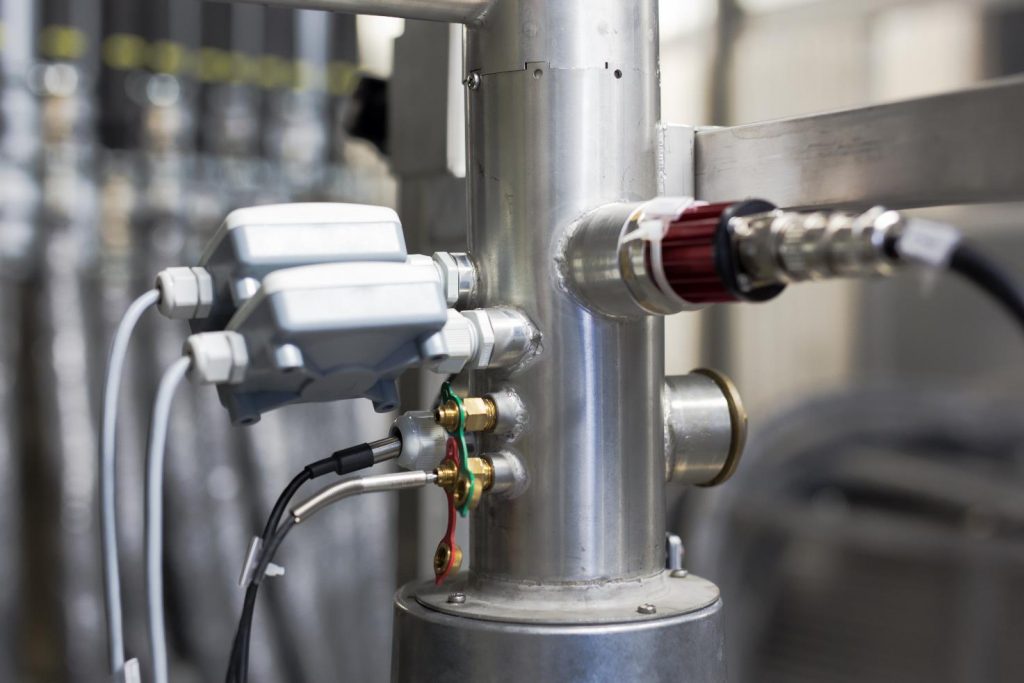
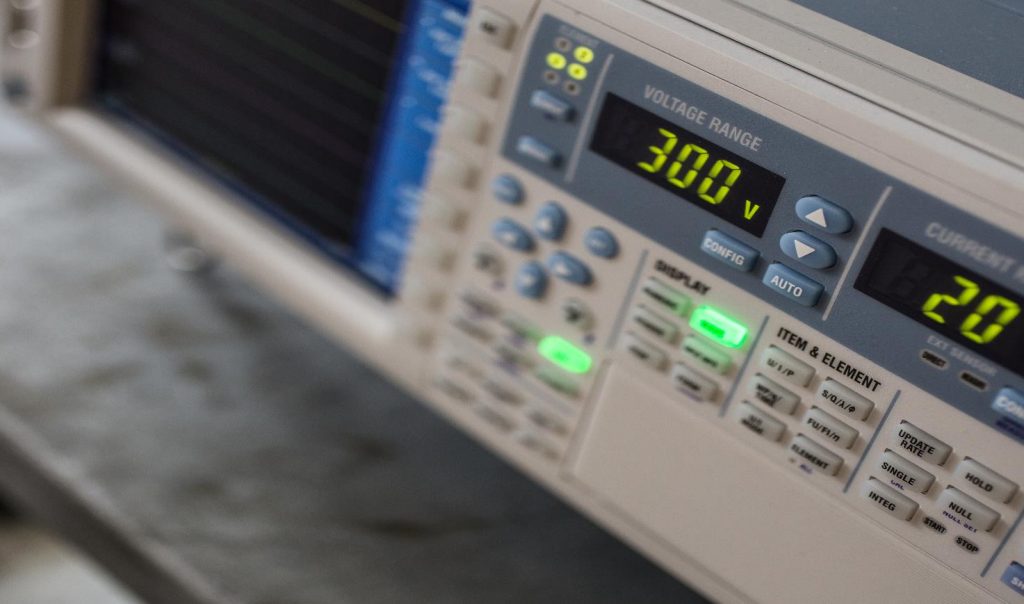
The instrumentation employed in the laboratory allows the assessment of performances (COP, SCOP, EER and SEER) and thermal outputs of the tested appliances as required by technical regulations. It allows also to monitor the main quantities of interest, i.e.: electrical quantities (power, current, voltage, electric phase shift etc.), flow rates, temperatures, pressure losses on the hydronic circuits, RPM, air speed of all test units. Then pressure and/or static pressure difference of ducted units; gas consumption and gas pressure of gas heat pumps.
In particular, the sound power level of the source under test (e.g. heat pump, fan coil, ..) is determined through the disposition, within the chambers and around it, of microphones connected to a multi-channel analyzer. Furthermore, through special set-up inside the chambers, it is also possible to carry out intensity tests and, by disposing microphone arrays, also to map the directivity and sound power of the source under test.
The laboratory provides high-level measuring instruments, calibrated at accredited laboratories and constantly checked and maintained. Each measurement is duplicated in order to verify continuously the measurement process and to allow a more in-depth analysis of the monitored data.
| QUANTITY | TYPE OF INSTRUMENTATION | ACCURACY |
| Water/brine flow rate | Mass Flow Meter | Class 0,1% |
| Water/brine flow rate | Electromagnetic Flow Meter | Class 0,2% |
| (Methane) Gas flow rate | Tumble Flow Meter | Class 0,2% |
| Temperature | Platinum Thermal Resistance – PT100 | Class 1/10 DIN |
| Temperature | Reference standard Thermometer for PT100 sensor | System Accuracy 0.04°C |
| Pressure | Differential Pressure Transmitter | Class ±0.075%: |
| Pressure | Pressure Transmitter | Class ±0.4%: |
| Dew Point | Chilled Mirror | ±0.2°C Dew Point – 0,1°C Tdb |
| Electricity | Wattmetro – Analyzer | Class ±0.2% |
| Sound Pressure | Multichannel Analyzer + microphones | Class 1 |
| Sound Intensity | Phonometer + intensity probe | Class 1 |
| Sound pressure, Intensity, Power | microphone arrays | (Class 1 microphones) |
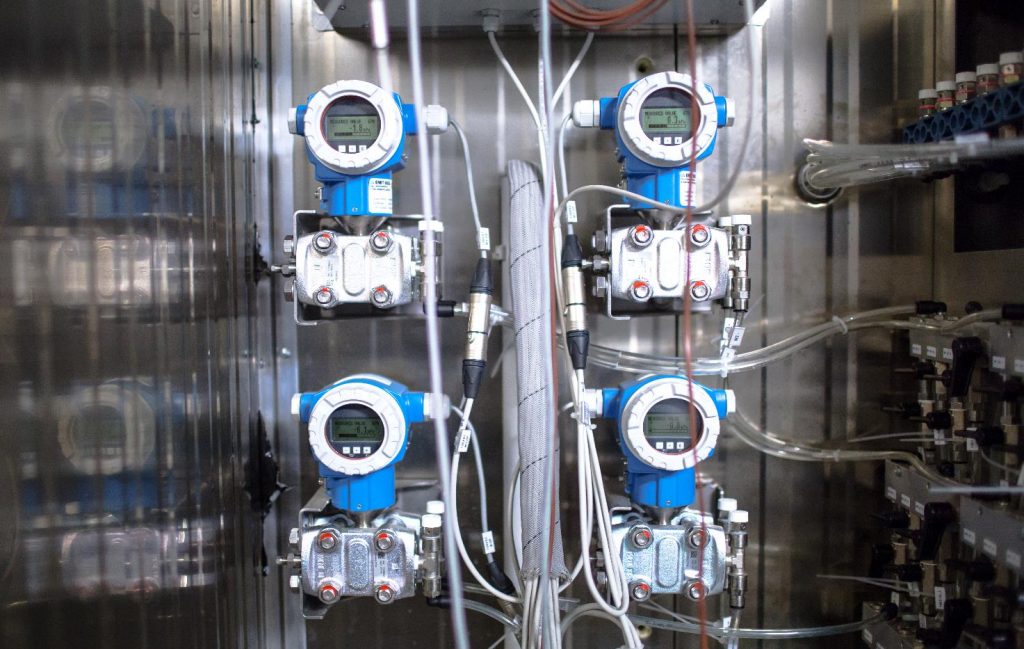
Both the 25kW calorimeter and the 100kW calorimeter are equipped with a test bench for testing heat pumps for domestic hot water (DHW) production. In both facilities, hydronic circuits and instrumentation are designed for carrying out tests in accordance with EN16147 requirements.
The test benches are completely automated. They are able to: test domestic hot water production systems with integrated or separated storage; to perform standardized or ad-hoc (based on manufacture’s request) draw-off profiles; to monitor all quantities of interest such as: domestic hot water flow rate, inlet/outlet domestic hot water temperature; tank temperature; water pressure; pressure and thermal losses; electric quantities and consumptions.
In the chambers of both calorimeters, test benches for testing gas fired appliances such as sorption heat pumps, hybrid heat pumps, boilers and endothermic heat pumps are positioned.
The chambers were these test benches are in, are equipped with all safety equipment and instrumentation to perform tests in accordance with the reference standards (i.e. EN 12309 and VDI 4650 Part 2). Furthermore there’s a main switch that allow swap from grid gas to certified gas in bottles and vice versa in case of accredited tests or research and development of new products which use different gases.
The test benches are then managed by a dedicated tool able to monitor and to record all relevant quantities such as: air temperature and humidity; water/brine flow rate; gas flow rate and gas pressure; water/brine and gas inlet/outlet temperature; pressure losses on hydronic side and electric quantities.
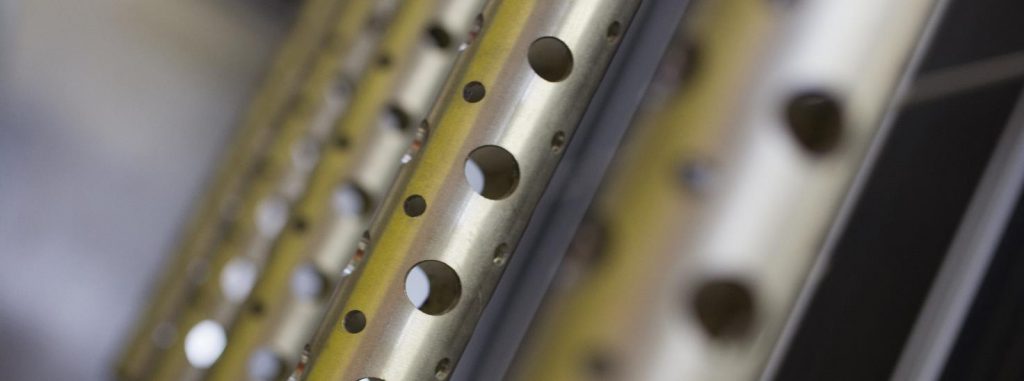
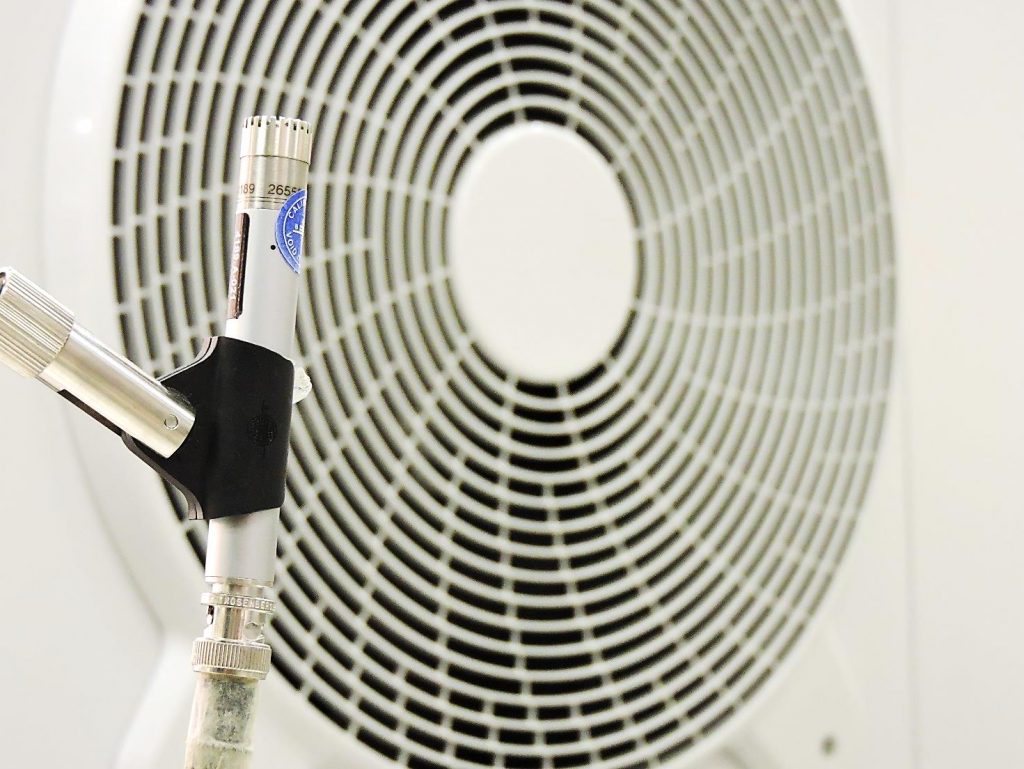
The Laboratory is equipped with phonometers, microphones, intensity probes, acoustic calibrators, reference sound sources, a multichannel analyzer which allows different types of measurements and a multichannel system with microphones array for sound mapping via beamforming and acoustic holography.
This instrumentation allows to carry out:
 [:it]
[:it]
Il Laboratorio RELAB è dotato di due Calorimetri Calibrati per il test di apparecchiature di potenza fino a 100 kW e di banchi di prova dedicati all’acqua calda sanitaria, alle pompe di calore a gas e ai recuperatori di calore statici. Nell camere climatiche si effettuano prove acustiche secondo norma.
La dotazione comprende in particolare:
Il calorimetro è composto da due camere climatiche (camera interna e camera esterna) che consentono di riprodurre le condizioni operative, in termini di temperatura e umidità, degli ambienti esterno e interno (abitativo, commerciale, tecnico) nei quali tipicamente si trovano installate le unità in prova nei range di tolleranza prescritti dalle norme.
In camera interna le temperature dell’aria possono variare da 5°C a 60°C; in camera esterna da -30°C fino a 60°C. A corredo delle camere sono predisposti circuiti idronici per portate a partire da 0.1 m3/h fino a 5m3/h.
Il calorimetro è composto da due camere climatiche (camera 1 e camera 2) ciascuna in grado di testare macchine per una potenza nominale massima di 50 kW. Aprendo la parete centrale è possibile realizzare una singola camera climatica per testare macchine monoblocco di potenza fino ai 100 kW. Entrambe le camere climatiche consentono di riprodurre le condizioni operative di temperatura (che possono variare da -30°C a +60°C) e umidità prescritte dalle norme tecniche. A corredo delle camere sono predisposti circuiti idronici per portate fino a 25m3/h.
Caratteristiche e Range di funzionamento dei Calorimetri da 25 kW e 100 kW
| GRANDEZZA | RANGE OPERATIVI |
| Temperatura Aria – Camera Interna | 5°C ÷ +60°C |
| Temperatura Aria – Camera Esterna | -30°C ÷ +60°C |
| Umidità Relativa Camere | 20% ÷ 95% |
| Temperatura Fluido Termovettore | -20°C ÷ +95°C |
| Portata Acqua e Acqua/Glicole Calorimetro 25 kW | Bassa= Q<1 m3/h ; Alta = 1<Q<5 m3/h |
| Portata Acqua e Acqua/Glicole Calorimetro 100 kW | Bassa=Q<1 m3/h – Media=1<Q<5 m3/h – Alta 5<Q<25 m3/h |
| Tensione | Fino a 460V |
| Corrente assorbita | Fino a 100A |
| Frequenza | 50Hz (predisp. per 60Hz) (predisp. per 60 Hz) |
| Banda di frequenza (per prove acustiche) | 100Hz÷10kHz |
Le camere dei due calorimetri possono essere usate separatamente, per macchine monoblocco, o contemporaneamente per macchine con unità separate (unità interna e unità esterna) o che prevedono configurazioni di prova canalizzate.
Oltre alle regolazioni dell’aria, il calorimetro consente di gestire anche le temperature e le portate dei fluidi (acqua e salamoia) alle macchine in prova.
La strumentazione in dotazione al laboratorio consente di rilevare resa termica e prestazioni (COP, SCOP, EER e SEER, GUE e SGUE) richieste dalle norme tecniche, le grandezze elettriche (potenza, corrente, tensione, sfasamento, ecc.) la portata, la temperatura e le perdite di pressione sui circuiti idronici delle unità in prova, il numero di giri motore, la velocità e pressione (o differenza di pressione) dell’aria per le unità canalizzate, il consumo e la pressione di gas metano per unità alimentate termicamente.
Le camere climatiche del calorimetro da 100kW vengono poi utilizzate per eseguire prove acustiche accreditate mediante il metodo delle pareti rigide. In particolare, attraverso la predisposizione di microfoni collegati ad un analizzatore multicanale e di una sorgente di riferimento, si determina il livello di potenza sonora di una sorgente in prova (pompa di calore, fan coil,,..). Inoltre attraverso particolari allestimenti all’interno delle camere è possibile effettuare anche prove di tipo intensimetrico ed effettuare una mappatura della direttività e della potenza sonora della sorgente in prova mediante array microfonici.
Il laboratorio mette a disposizione strumentazione di eccellenza, tarata presso centri accreditati e costantemente verificata e manutenuta. Ogni misura è duplicata per consentire una verifica costante e un analisi più approfondita dei dati monitorati.
| GRANDEZZA | TIPO STRUMENTAZIONE | ACCURATEZZA |
| Portata acqua | Misuratore Portata Massica | Classe 0,1% |
| Portata acqua | Misuratore Portata Elettromagnetica | Classe 0,2% |
| Portata Gas Metano | Misuratore Portata a Tamburo | Classe 0,2% |
| Temperatura | Termo resistenza al Platino – PT100 | Classe 1/10 DIN |
| Temperatura | Reference standard Thermometer for PT100 sensor | Accuratezza Sistema 0.04°C |
| Pressione | Trasmettitore di Pressione Differenziale | Classe ±0.075%: |
| Pressione | Trasmettitore di Pressione | Classe ±0.4%: |
| Dew Point | Specchio Raffreddato | ±0.2°C Dew Point – 0,1°C Tdb |
| Elettricità | Wattmetro – Analizzatore | Classe ±0.2% |
| Pressione sonora | Analizzatore multicanale + microfoni | Classe 1 |
| Intensità sonora | Fonometro + sonda intensimetrica | Classe 1 |
| Pressione, Intensità, Potenza sonore | Array microfonici | (microfoni di classe 1) |
Sia nel Calorimetro da 25 kW che in quello da 100 kW sono presenti due banchi prova per pompe di calore per la produzione di acqua calda sanitaria (ACS) dotati di strumentazione e circuitazione idronica progettata e interamente dedicata alla conduzione di prove secondo norma EN16147.
Il banchi prova sono gestiti in maniera completamente automatizzata e consentono di testare sistemi per la produzione di acqua calda sanitaria dotati di accumulo integrato o separato, effettuando i prelievi previsti dalla norma o creati ad hoc secondo specifiche del costruttore e contabilizzando tutte le principali grandezze di interesse quali: portata dell’acqua, temperature di ingresso/uscita dell’acqua, temperature serbatoio, pressioni acqua, perdite di carico ed assorbimenti elettrici.
Nella camere dei calorimetri da 25 kW e 100 kW sono stati collocati due banchi di prova per macchine alimentate a gas, come pompe di calore ad assorbimento, macchine ibride, caldaie o pompe di calore a motore endotermico.
Le camere sono dotate di tutta la strumentazione e le dotazioni di sicurezza per realizzare prove secondo le principali norme (ad esempio EN 12309 e VDI 4650 Part 2) e sviluppo di apparecchiature e componenti mediante utilizzo di gas proveniente dalla rete o da un sistema di bombole di gas certificato.
Il sistema è gestito da un tool dedicato, consente di monitorare e contabilizzare tutte le principali grandezze di interesse quali: temperatura e umidità dell’aria, portata dell’acqua, portata e pressione del gas, temperature di ingresso/uscita dell’acqua e del gas, perdite di carico idroniche ed assorbimenti elettrici.
Il laboratorio è dotato di fonometri integratori, microfoni, sonde intensimetriche, calibratori acustici, sorgenti sonore di riferimento, un analizzatore multicanale configurabile per misure di diversa tipologia ed un sistema multicanale con array microfonico per mappature tramite beamforming ed olografia acustica.
Questa strumentazione permette di realizzare:
[:]